
Why Your Website Gets Traffic but No Leads (And How to Actually Fix It)
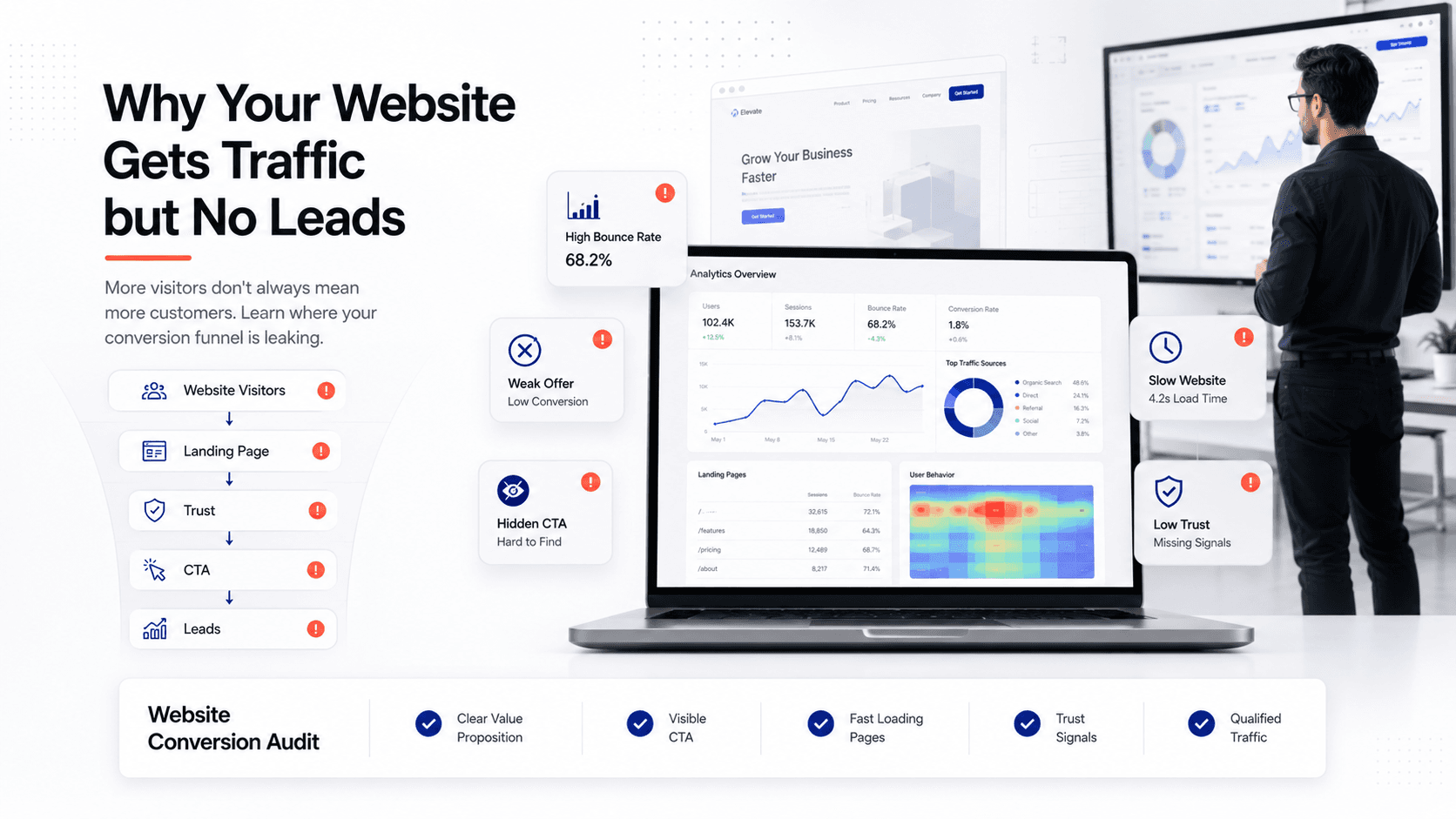
Why Your Website Gets Traffic but No Leads (And How to Actually Fix It)
Here's a specific kind of frustration: your analytics dashboard looks genuinely good. A few thousand visitors a month, the SEO is finally paying off, the ads are driving clicks, and social is sending people over. Every number that's supposed to matter is going up and to the right.
And your inbox is still quiet. No enquiries, no demo requests, no quote submissions, nothing that looks like an actual business result.
If that sounds familiar, the instinct is usually to assume the marketing isn't working hard enough, more SEO, bigger ad spend, more content. But in most cases, that's the wrong diagnosis. You don't have a traffic problem. You have a conversion problem, and it's a very different thing to fix.
Your Website Is a Funnel, Whether You Designed It That Way or Not
Picture walking into a physical store where the products are hard to find, nobody greets you, there's no visible pricing, and no one can explain what the business actually does. You'd probably leave within a minute or two, and you almost certainly wouldn't come back.
That's essentially what's happening when a website gets traffic but no leads. Traffic just gets people through the door. What happens after that, whether they understand what you offer, whether they trust you, whether it's obvious what to do next, is entirely the website's job. If friction shows up anywhere in that sequence, the visit ends without anyone reaching out, no matter how well the traffic itself was earned.
1. The Offer Isn't Actually Compelling
What it looks like: People land on the site, read for a bit, and leave without contacting anyone. The homepage talks a lot about the company, history, mission, and team, but not much about the actual problem it solves.
Why it hurts: Nobody visits a business website to learn its origin story. They're there because they have a problem and they're trying to figure out, quickly, whether this company can solve it. If that's not obvious almost immediately, they'll assume the answer is no and move on.
The fix: Shift the messaging from features to outcomes. "We build websites" tells a visitor almost nothing useful. "We build websites that generate more leads and sales" tells them exactly why they should care. A strong offer makes it clear who you help, what problem you solve, why you're different from the obvious alternative, and what result someone can actually expect. People aren't buying a service. They're buying an outcome, and the offer needs to say so directly.
2. There's No Clear Next Step
What it looks like: Visitors read the content, seem interested, and then just... leave. Maybe the "Contact Us" button is buried in the footer. Maybe every page has a slightly different call-to-action. Maybe, on some pages, there isn't one at all.
Why it hurts: People rarely take action unless they're clearly asked to. When navigation is cluttered, or there are too many competing options, book a call, download a guide, request a quote, sign up for a newsletter, all fighting for attention on one page, most visitors resolve that decision fatigue by doing nothing at all.
The fix: Every important page should point toward one primary action, not several competing ones. "Book a Free Consultation," "Get a Custom Quote," "Start Your Free Trial", pick one per page and commit to it. Keep it above the fold, visually obvious, repeated if the page is long, and written with direct action language. If a visitor has to pause and think about what happens if they click, that hesitation is usually enough to lose them.
3. There's Nothing Building Trust
What it looks like: People make it all the way to the services or pricing page and then hesitate. Nothing on the site actively reassures them that this business delivers what it promises.
Why it hurts: Trust is one of the biggest levers in any online decision, and it's easy to underestimate how much weight it carries. Without visible proof that other people have had a good experience, a visitor's default assumption tends to be caution; nobody wants to be the one who finds out the hard way that a company overpromises.
The fix: Make the evidence visible, not just available somewhere on the site. Client testimonials, Google reviews, case studies, recognizable client logos, certifications, years in business, real numbers from real projects. Every trust signal removes a small amount of perceived risk, and removed risk is often the difference between someone reaching out and someone quietly closing the tab.
4. The Website Is Just Too Slow
What it looks like: People arrive, look at one page, and leave. Bounce rate is high, especially on mobile, and session length is short enough that it's hard to imagine anyone reading much of anything.
Why it hurts: Speed shapes the entire first impression before a visitor has processed a single word of copy. Heavy images, unnecessary animations, and bloated code all add seconds to load time, and every extra second is another small reason to leave before the page even finishes rendering.
The fix: Compress images properly before they go live. Use modern formats like WebP instead of defaulting to whatever came out of the design tool. Cut plugins that aren't earning their keep, enable caching, clean up unnecessary scripts, and make sure hosting is actually reliable. None of this is glamorous work, but it's often the fastest, cheapest improvement available.
5. The Traffic Itself Is the Wrong Traffic
What it looks like: The visitor count looks healthy, but almost none of them resemble an actual ideal customer.
Why it hurts: Traffic and qualified traffic aren't the same thing, and it's easy to optimize for the wrong one. Ranking for broad keywords can inflate visitor numbers without bringing in anyone actually looking to buy. Loosely targeted ads do the same thing, plenty of clicks, very little intent behind them.
The fix: Get specific about who the traffic is actually for. Are the target keywords aligned with what real buyers search, or just what's easiest to rank for? Does the content answer the questions someone with real buying intent would actually ask? Do the ads reach people who can make a decision, not just people who clicked out of curiosity? Does each landing page match what the visitor was expecting when they clicked? More targeted traffic reliably outperforms more traffic, even when the total numbers look smaller.
A Quick Conversion Audit You Can Run Today
No expensive tools required — just an honest walk through your own site.
Messaging
Can someone understand what you do within about five seconds?
Is the value proposition obvious without having to dig for it?
Calls-to-action
Is the primary CTA visible without scrolling?
Does every important page point toward one clear action?
Trust
Are testimonials or reviews easy to actually find?
Is there visible proof of real client work or results?
Performance
Does the homepage load quickly on a phone, not just a fast office connection?
Are images properly optimized?
User experience
Is the navigation genuinely simple, or does it take a few clicks to find anything?
Are forms short, or do they ask for more than they need?
Can visitors reach you more than one way, phone, email, chat?
If several of these come back "not really," that's usually where the leads are actually going.
Traffic Is Only Half the Equation
It's tempting to assume the fix is always more, more SEO, a bigger ad budget, more content going out every week. Sometimes that's genuinely true. But often, the bigger opportunity is already sitting in the analytics that already exist.
Consider what happens if the conversion rate moves from 1% to 3%. Traffic hasn't changed at all. The website has just started doing its actual job. For most businesses, that shift is faster to achieve and considerably cheaper than trying to triple traffic through paid channels alone.
Frequently Asked Questions
Why would a website get good traffic but still generate no leads? Usually because something in the conversion path is creating friction, an unclear offer, a hard-to-find call-to-action, missing trust signals, slow load times, or traffic that isn't actually aligned with who the business serves. Traffic volume and lead volume are related but not the same metric.
How do I know if my problem is traffic or conversion? If visitor numbers are healthy but form submissions, calls, or enquiries are low relative to that traffic, it's almost always a conversion issue rather than a traffic issue. Comparing your conversion rate against typical benchmarks for your industry is a useful gut-check.
What's a good website conversion rate? It varies significantly by industry, but many service-based businesses see meaningful results moving from around 1% to 2–3%. The specific number matters less than the direction; steady improvement usually beats chasing an arbitrary industry average.
Should I fix conversion issues before increasing ad spend? In most cases, yes. Sending more traffic into a website with unresolved conversion problems just means paying more to generate the same low result. Fixing the funnel first typically makes every dollar spent on traffic afterward go further.
Final Thoughts
If a website is bringing in traffic but not leads, that's rarely a sign the marketing has failed, it's usually a sign that somewhere in the journey, from first click to actually reaching out, something is quietly getting in the way. A weak offer, an unclear next step, missing trust signals, sluggish performance, or simply the wrong audience can each be enough on their own to keep visitors from converting.
The genuinely good news is that every one of these is fixable, testable, and often faster to address than most businesses expect. Before spending more to bring in additional visitors, it's worth making sure the ones already arriving actually have a reason to become customers.
Ready to Turn More Visitors Into Customers?
We help businesses find and fix the specific points where visitors stall ou, from landing page optimization and conversion rate work to broader lead generation strategy. If your website is bringing in traffic but not results, the fix is usually more specific and more achievable than it feels from the inside.
Let's find out exactly where your funnel is leaking and fix it before you spend another dollar driving traffic to it.
More posts
All posts →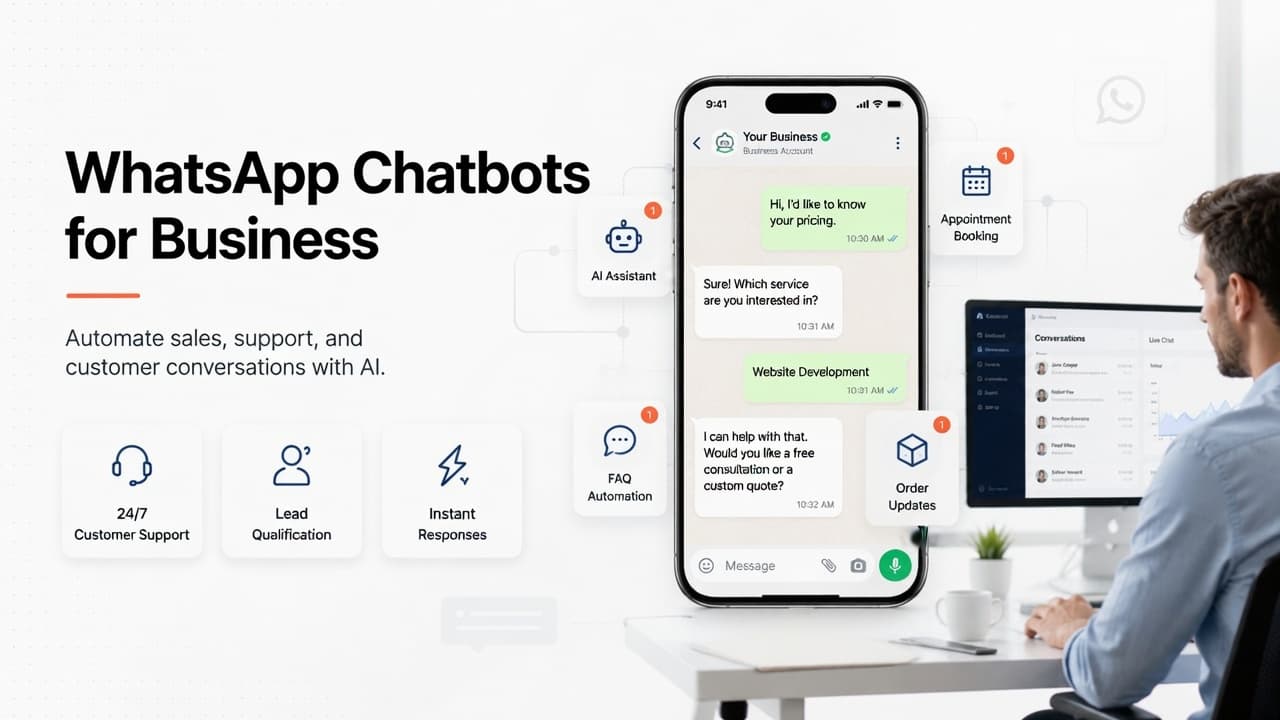
WhatsApp Chatbots for Business: Automate Sales & Support Without Losing the Human Touch
A customer messages your business on WhatsApp at 11:30 pm. Your team's offline. By morning, they've already messaged a competitor. Here's how businesses are using AI-powered WhatsApp chatbots to catch that moment, without turning every conversation into something that feels robotic.

AI Product Recommendations: Are They Actually Worth It?
Customers who bought this also bought" used to be as good as personalization got. AI recommendation engines promise something smarter, but they're not free, they're not instant, and they don't work well on every store. Here's an honest look at what they actually deliver.
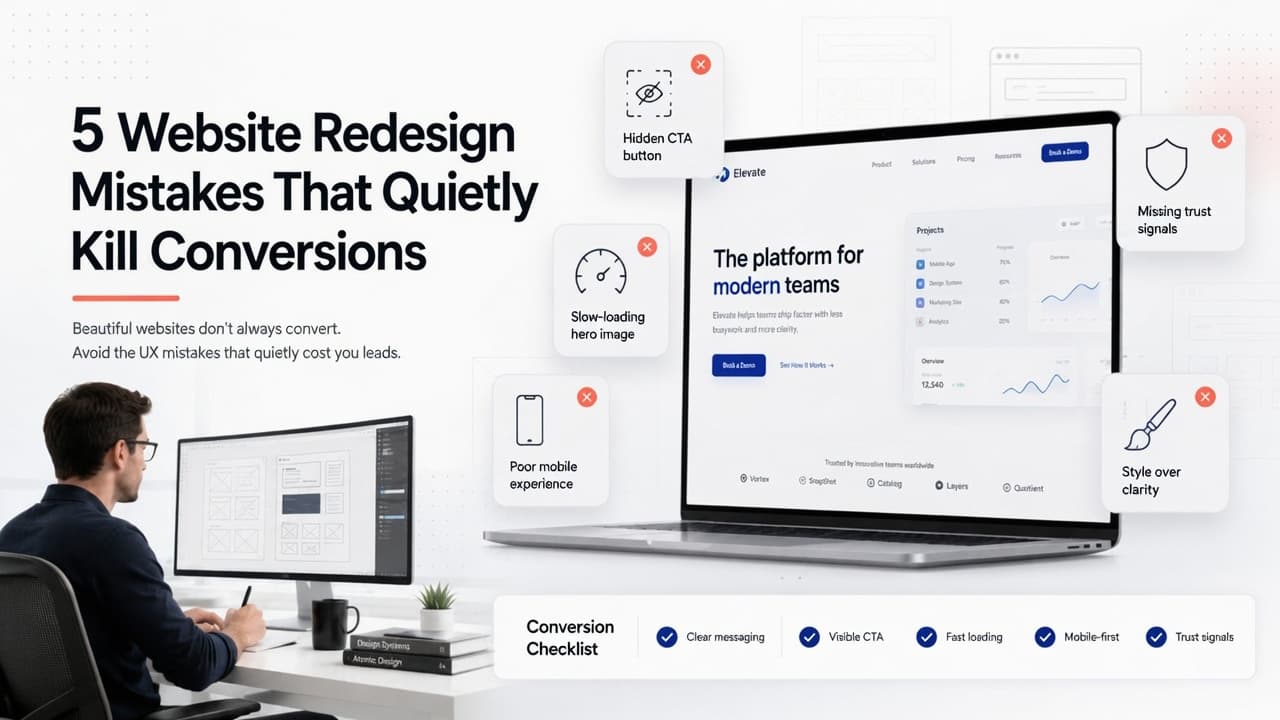
5 Website Redesign Mistakes That Quietly Kill Your Conversions
A redesign that looks better on launch day can still perform worse a month later, and most businesses don't find out why until leads start drying up. Here are the five mistakes that quietly do the damage, and what to check before you ship.