
AI Product Recommendations: Are They Actually Worth It?
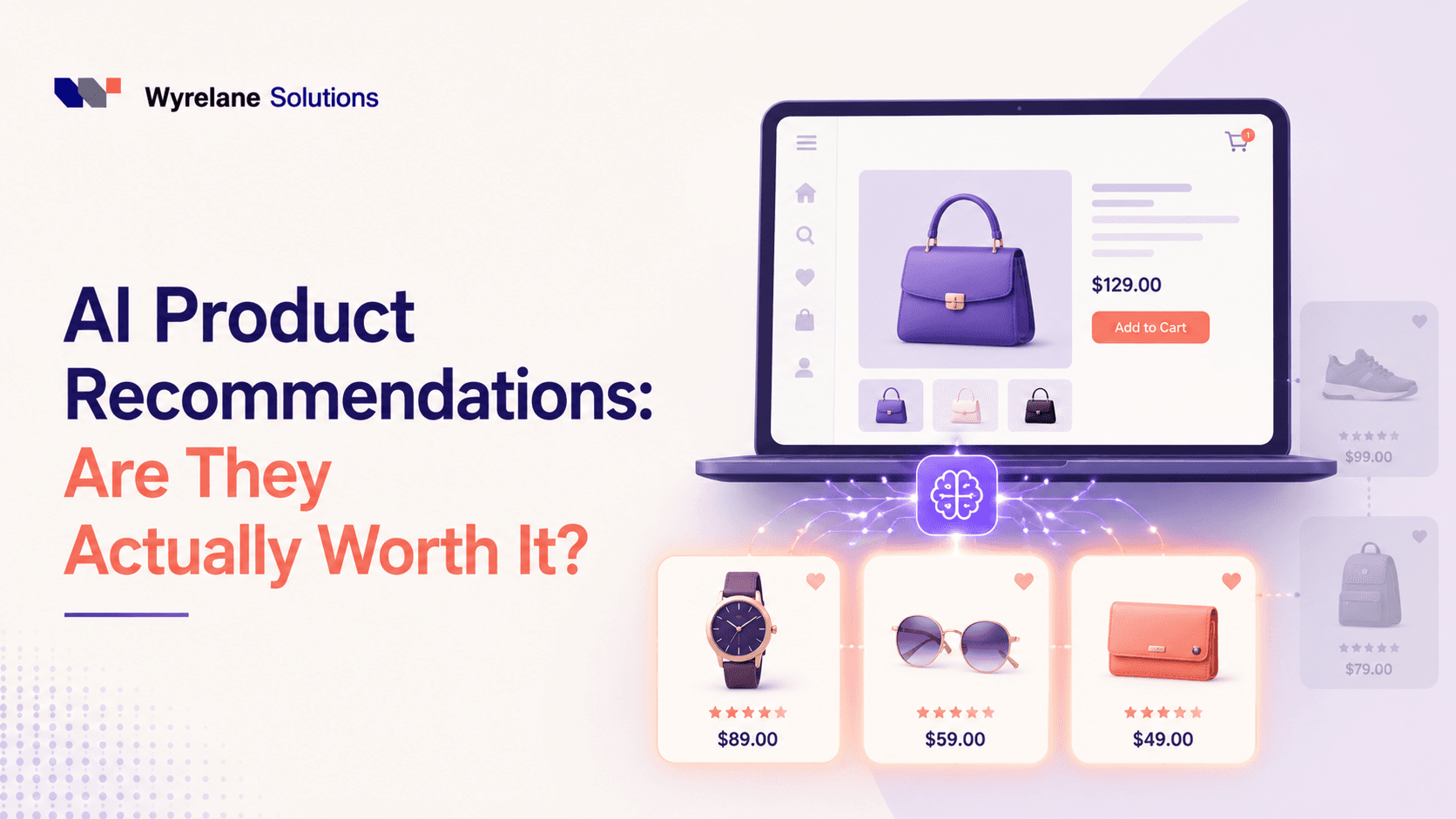
AI Product Recommendations: Are They Actually Worth It?
Almost every e-commerce site has some version of "you might also like" tucked somewhere on the page. It's been there so long it's practically wallpaper, a section people scroll past without registering it's even AI-driven, or that it used to be a lot dumber than it is now.
AI product recommendations have quietly gotten a lot more sophisticated in the last few years, and the pitch around them has gotten louder, along with it higher conversion, bigger cart sizes, and a shopping experience that feels personal instead of generic. Some of that is genuinely true. Some of it depends heavily on the store it's implemented on, and a fair amount of the value gets left on the table by businesses that install a recommendation widget and assume the AI part does all the remaining work on its own.
Worth unpacking honestly, then what's actually changed, what these systems are good at, where they fall flat, and whether the investment makes sense for a given business.
What Changed Between "Also Bought" and Actual Personalization
The old version of product recommendations was a blunt instrument: look at what other customers who bought Product A also bought, and show that list to anyone else looking at Product A. It worked reasonably well in aggregate, mostly because it required almost no context to function, no understanding of the individual shopper, just a pattern across everyone.
Modern AI recommendation engines work with a lot more signal. They factor in an individual's own browsing behavior, what's currently in their cart, past purchase history, how long they've spent looking at specific products, even contextual details like time of day or device. The result isn't "people like you bought this" anymore; it's closer to "based on what you specifically seem to be looking for right now, this is probably relevant." That's a meaningfully different kind of personalization, and it's the reason recommendation engines have started producing noticeably better results than the older pattern-matching versions.
Where This Actually Moves the Needle
Average order value. This is usually where recommendation engines earn their keep most visibly. A well-placed, genuinely relevant suggestion at checkout or on a product page the accessory that pairs naturally, the size that's frequently bought alongside this one tends to increase what a customer buys per visit without feeling like an upsell. The distinction matters: a good recommendation feels like a helpful nudge, a bad one feels like being sold to, and the two produce very different reactions.
Product discovery. Large catalogs have a real problem: most customers only ever see a small fraction of what's actually available, usually whatever ranks highest in search or gets the most marketing attention. Good recommendations surface relevant products a shopper would likely never have found by browsing or searching manually, which matters especially for stores with deep or niche inventory that doesn't naturally bubble up on its own.
Repeat engagement. Recommendations that show up in emails or on a returning visitor's homepage based on their actual behavior tend to bring people back in a way generic newsletters don't. It's the difference between "here's what's on sale this week" and "here's something specifically relevant to what you were looking at last time," and the second one earns attention the first one has largely lost.
Reduced decision fatigue. For catalogs with a lot of similar options, a good recommendation engine effectively narrows the field for a shopper who doesn't want to compare forty variations of the same product category. That reduction in friction quietly supports conversion in a way that's hard to measure directly but shows up in aggregate.
Where It Doesn't Automatically Work
Low catalog size. If a store sells thirty products total, there's often not enough variety or purchase data for a recommendation engine to meaningfully outperform simple, manually curated suggestions. The AI needs enough signal to actually learn from, and a small catalog with limited traffic doesn't always provide that.
Low traffic volume. These systems improve with data. A store getting a handful of visits a day doesn't generate enough behavioral signal for the AI to identify real patterns quickly, which means the recommendations stay generic for much longer than they would on a higher-traffic site.
Recommendations that ignore context. A poorly tuned engine will happily recommend a product someone just bought, or something wildly irrelevant to what they're currently browsing, and customers notice fast when suggestions feel random rather than considered. This is often less a limitation of the technology and more a sign that the implementation wasn't given enough attention after launch. Recommendation engines need occasional tuning, not just a one-time setup.
Treating personalization as a substitute for good merchandising. AI recommendations work best as a layer on top of solid product categorization, clear descriptions, and decent photography, not as a fix for a catalog that's poorly organized to begin with. If the underlying product data is messy, the recommendations built on top of it usually inherit that mess.
What It Actually Costs to Do Well
This is the part that tends to get skipped in the pitch. A genuinely effective recommendation engine isn't a plugin you install and forget. It requires clean, well-structured product data for the AI to work from, enough traffic and purchase history to actually learn meaningful patterns, and this is the part most businesses underestimate: ongoing attention. Recommendation logic that made sense at launch can quietly become stale as a catalog changes, seasons shift, or customer behavior evolves, and nobody notices until conversion on that section quietly drops.
The upfront cost varies a lot depending on whether it's a built-in feature of an existing platform, a third-party app, or a custom-built system tailored to a specific catalog and customer base. The ongoing cost is smaller, but a real periodic review of what's actually being recommended, and adjustments as the business changes.
So, Are They Worth It?
For most stores with a reasonable catalog size and consistent traffic, yes, the data pretty consistently shows a measurable lift in average order value and engagement when recommendations are implemented properly. The honest caveat is in that last phrase. The value isn't in having AI recommendations. It's in having ones that are actually tuned to a specific business, checked periodically, and treated as an ongoing part of the site rather than a one-time setup task.
A useful way to think about it: a recommendation engine is closer to hiring a genuinely observant sales associate than installing a static feature. It gets better the more it learns about your specific customers and catalog, and it degrades if nobody's paying attention to whether it's still making sense.
Frequently Asked Questions
Do AI product recommendations actually increase sales, or are those mostly marketing claims? There's real evidence that properly implemented recommendation engines commonly increase average order value and engagement, particularly in stores with a reasonably sized catalog and consistent traffic. The impact is smaller or unreliable on very small stores with limited data.
How much traffic does a store need before AI recommendations are worth implementing? There's no strict cutoff, but recommendation engines generally need enough browsing and purchase data to identify real patterns. Very low-traffic stores often see limited benefit until traffic and purchase history build up, and may get more value from simple manual curation in the meantime.
Can AI recommendations feel invasive or pushy to customers? They can, if they're poorly tuned or based purely on tracking without contextual relevance. Recommendations that clearly reflect what someone's actually looking for tend to feel helpful; ones that feel like generic ad retargeting tend to feel intrusive. The difference usually comes down to implementation quality.
Do AI recommendations replace the need for good product categorization and descriptions? No. Recommendation engines work best on top of clean, well-organized product data. If the underlying catalog is disorganized, recommendations built on it typically inherit those same problems rather than fixing them.
Final Thoughts
AI product recommendations aren't a gimmick anymore, but they're also not the guaranteed win they're sometimes pitched as. Done well with clean data, enough traffic to learn from, and periodic attention rather than a set-and-forget mindset, they genuinely move metrics that matter: order value, discovery, repeat engagement. Done poorly, they're just an ignored widget quietly taking up space on a product page.
The honest answer to "are they worth it" isn't yes or no. It's worth it if you're prepared to implement them properly and keep tuning them, but it's not particularly worth it if the plan is to install something once and expect it to run itself indefinitely.
Curious What Personalization Could Actually Do for Your Store?
Every catalog and customer base behaves a little differently, which means the right recommendation strategy isn't one-size-fits-all either. Our AI team can assess whether your store has what it needs to benefit from AI-driven personalization and build a system that's actually tuned to your products and customers, not a generic plugin.
Get in touch, and we'll help you figure out if AI recommendations are the right move for your store right now.
More posts
All posts →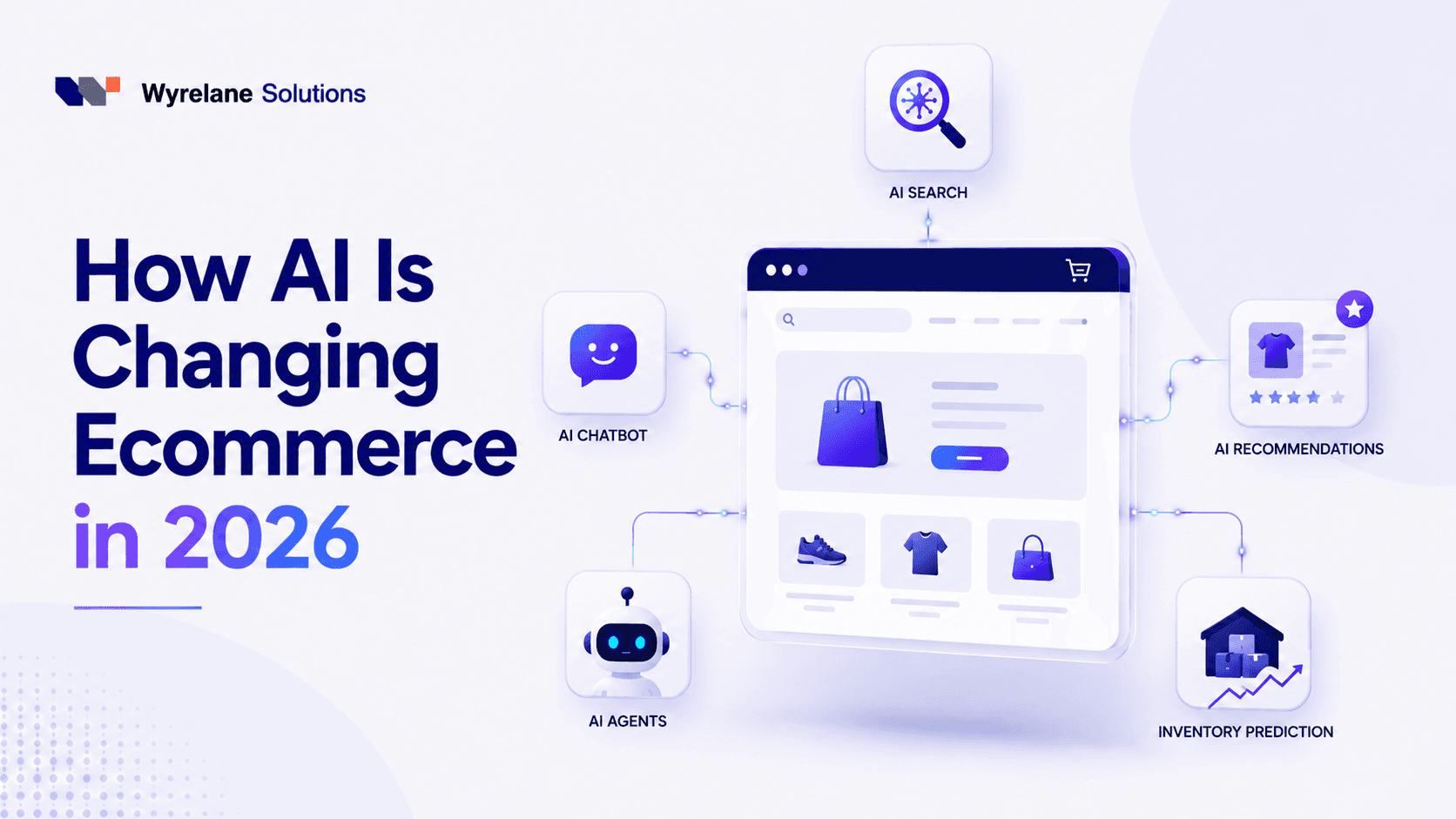
How AI Is Changing Ecommerce in 2026
The ecommerce experience customers expect in 2026 barely resembles what worked five years ago. AI search, AI agents, and predictive inventory aren't experimental anymore; they're quickly becoming the baseline. Here's what's actually changed, and what it means for businesses still catching up.
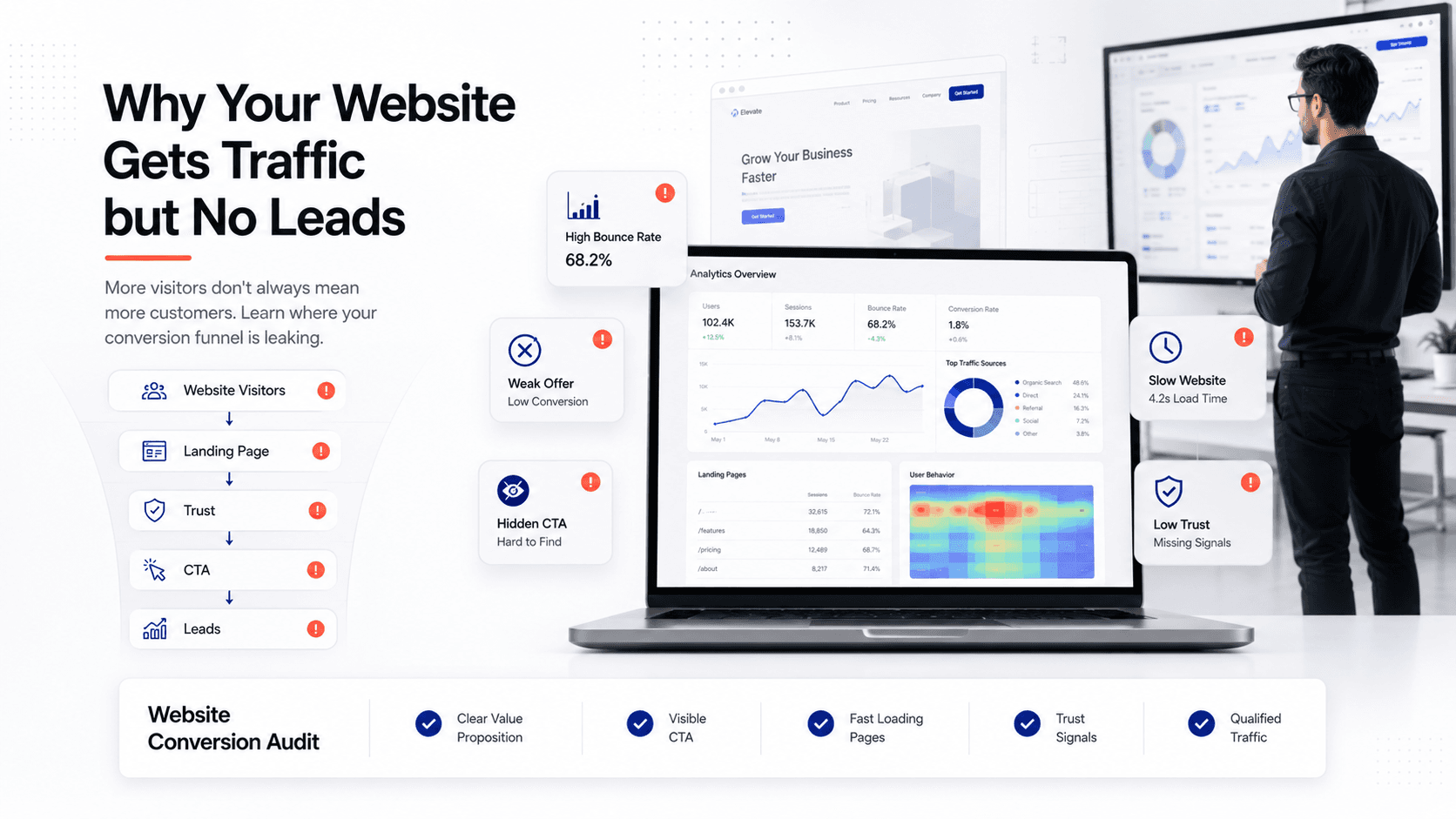
Why Your Website Gets Traffic but No Leads (And How to Actually Fix It)
Thousands of visitors a month and an inbox that stays quiet, it's one of the most confusing problems in business, because everything on paper says the marketing is working. It's not a traffic problem. Here's what's actually going on and how to fix it.
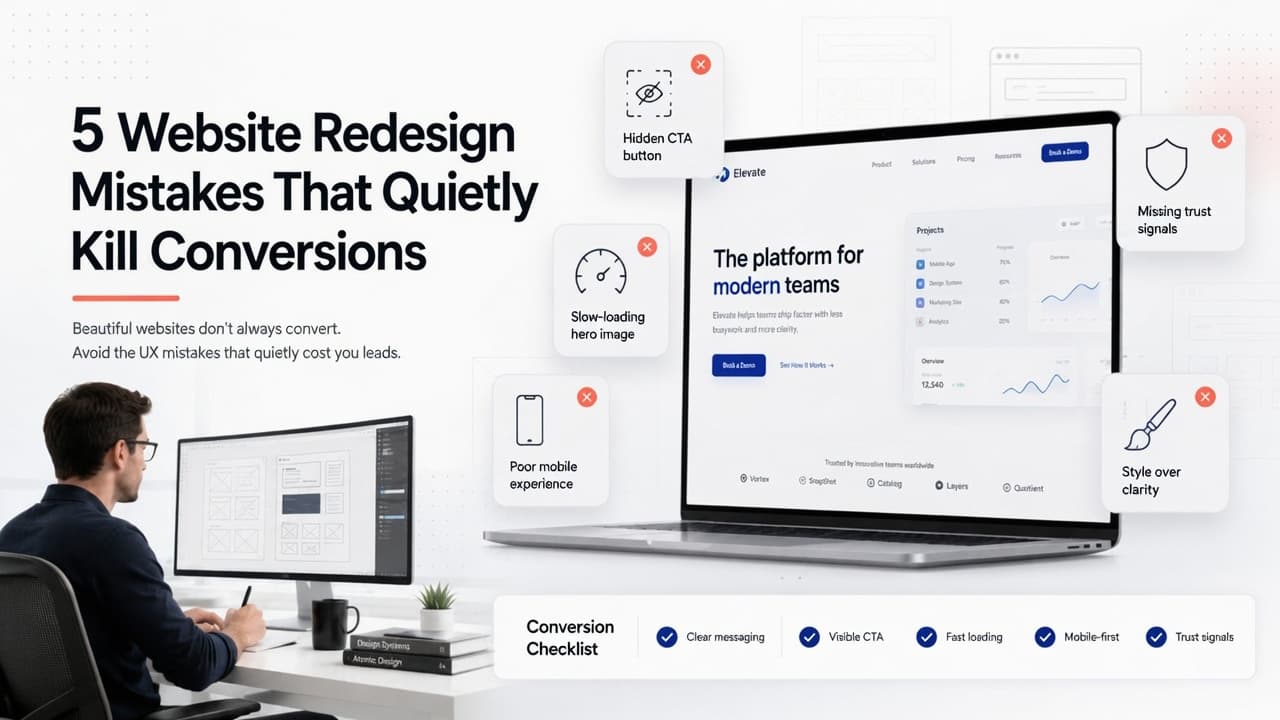
5 Website Redesign Mistakes That Quietly Kill Your Conversions
A redesign that looks better on launch day can still perform worse a month later, and most businesses don't find out why until leads start drying up. Here are the five mistakes that quietly do the damage, and what to check before you ship.