
Why Website Speed Impacts Revenue More Than Most Businesses Realize
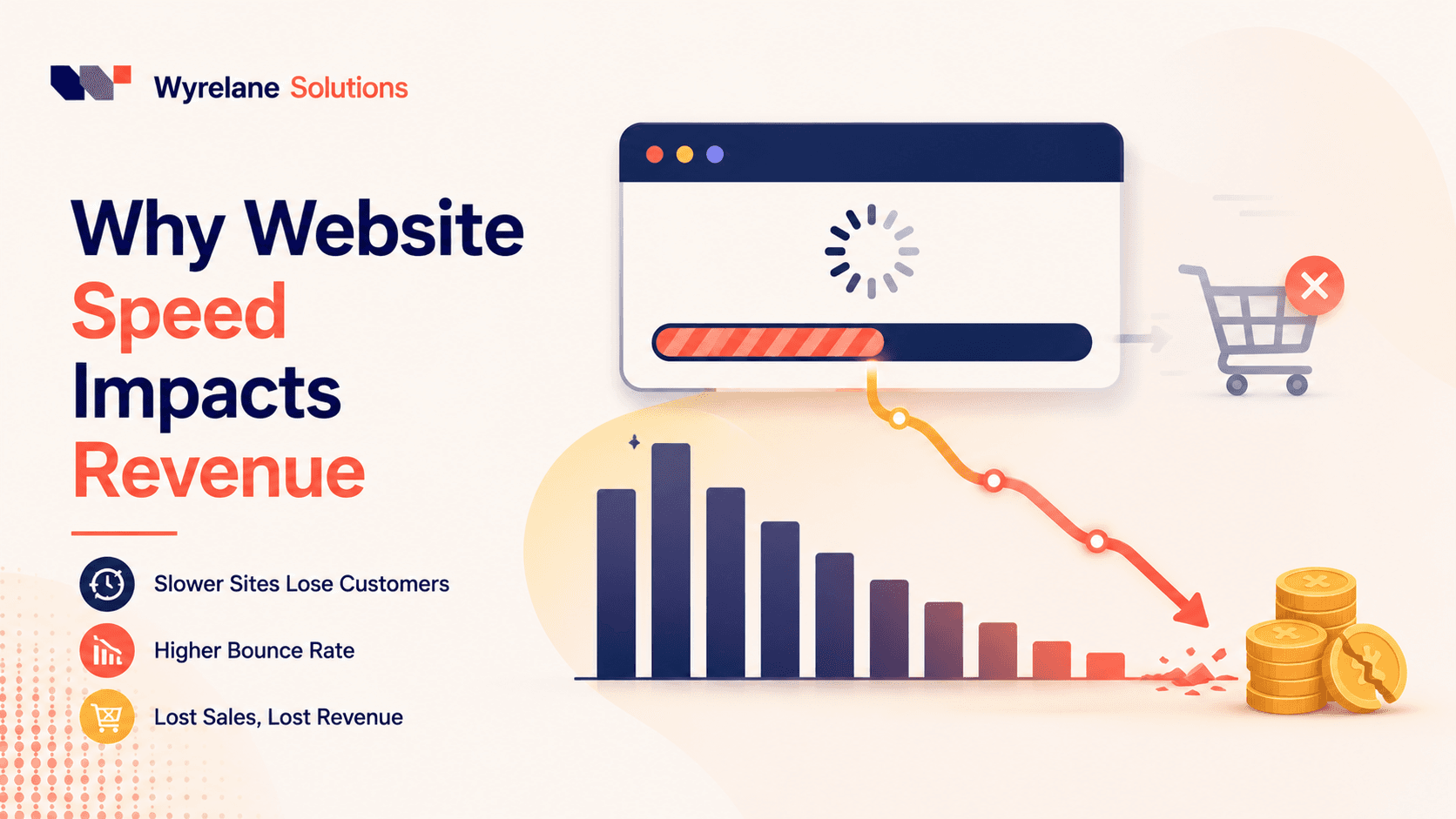
Why Website Speed Impacts Revenue More Than Most Businesses Realize
No finance team has ever had a line item called "revenue lost to a slow website." It doesn't show up on a P&L, it doesn't get flagged in a board meeting, and it never triggers the kind of urgency a dip in sales usually would. It just quietly happens, spread across thousands of small moments where someone almost bought something and didn't wait around long enough to finish.
That invisibility is exactly why website speed gets treated as a technical nice-to-have instead of what it actually is: a direct, measurable input into revenue. Not a ranking factor, not a UX detail, a business metric that behaves a lot like price or product quality, just less visible on a spreadsheet.
The Math Behind "A Few Seconds Doesn't Matter"
It's an easy thing to underestimate, because a few seconds genuinely doesn't feel like much when you're the one testing your own site on a fast office connection. The problem is that your customers aren't testing it under those conditions. They're on patchy mobile data, older phones, and shorter attention spans than any internal team member testing the site with full context and patience.
The relationship between load time and conversion isn't linear; it's closer to a cliff. Sites that load in around one second convert meaningfully better than sites taking three seconds, and that gap widens further past three seconds, particularly on mobile. The businesses that actually measure this consistently find that shaving even a second off load time produces a real, trackable lift in completed purchases or form submissions, not a marginal, hard-to-detect one.
The reason this feels abstract is that nobody experiences "lost revenue" as an event. They experience it as slightly fewer people finishing checkout this month, which gets attributed to seasonality, ad fatigue, or a dozen other more visible explanations before anyone checks whether the site itself got slower.
Where the Money Actually Leaks
Cart abandonment that never gets attributed to speed
Cart abandonment is treated as a normal cost of doing e-commerce, and to some extent, it is. But a meaningful share of abandoned carts aren't abandoned because of price hesitation or a change of heart; they're abandoned because the checkout page took too long to load, a payment step hung for a few extra seconds, or a page reflowed unexpectedly right as someone was about to tap "confirm." None of that gets logged as "left because the site was slow." It just gets logged as an abandoned cart, indistinguishable from every other reason someone didn't finish.
Paid traffic that gets more expensive for no visible reason
This is one of the least understood costs of a slow site. Advertising platforms, particularly search ads, factor landing page experience and speed into cost-per-click and ad rank. A slow landing page doesn't just convert worse; it can make the same ad spend less efficient at the platform level, quietly raising customer acquisition cost across every campaign pointed at that page. Businesses often respond to rising ad costs by tweaking targeting or creative, without ever checking whether the landing page itself became part of the problem.
Mobile revenue specifically, since patience runs out faster there
For most businesses, mobile traffic now makes up the majority of visits, and mobile users are considerably less tolerant of slow load times than desktop users testing on a stable connection. A site that performs acceptably on desktop can be genuinely painful on mobile, and since mobile is often the larger share of total traffic, that gap disproportionately affects overall revenue, not just a minority of visits.
Trust, which is harder to quantify but very real
A slow, janky site creates a subtle but real credibility problem, particularly for a business a customer hasn't bought from before. Speed isn't just about patience; it's read, often subconsciously, as a signal of quality and legitimacy. A hesitant first-time customer deciding whether to trust a business with their payment details is more likely to hesitate further if the site itself feels unreliable before they've even reached checkout.
Return visits that quietly stop happening
A frustrating first experience doesn't just cost the immediate sale; it reduces the odds of a return visit at all. Customers rarely give a slow site a second chance to make a better impression; they just default to whichever competitor's site didn't make them wait. That's a compounding cost that never shows up as a single lost sale; it shows up as a smaller repeat-customer base over time.
Why This Gets Missed So Often
Speed problems are unusually easy to normalize internally. A team that's used a site every day for months stops noticing load time the way a first-time visitor would, and testing on a good office connection or a newer device masks exactly the experience most real customers are actually having. By the time speed becomes a topic of conversation, it's usually because someone external flagged it, an agency doing an audit, a customer complaint, a sudden drop in conversion that finally gets investigated properly, rather than something the business caught proactively.
There's also a structural reason this gets deprioritized: speed fixes are rarely urgent-feeling work. Nothing is broken in an obvious way, nothing triggers an outage alert, so it competes for attention against feature requests and marketing campaigns that feel more directly tied to growth, even when fixing speed would likely produce a larger return.
What Actually Moves the Needle
The good news is that meaningful speed improvements don't usually require rebuilding a site from scratch. A short list of the changes that tend to produce the most noticeable revenue impact relative to effort:
Compressing and properly sizing images, which is consistently the single biggest quick win on most sites
Reviewing third-party scripts (tracking pixels, chat widgets, marketing tools) and removing ones that aren't earning their keep
Upgrading hosting if the current setup is straining under real traffic
Making sure the checkout and cart pages specifically are fast, since these are the highest-value pages on the entire site
Testing on an actual mid-range phone with average mobile data, not just a fast office connection
That last point matters more than it seems. A lot of businesses genuinely don't know their site is slow because nobody on the team has tested it the way a real customer actually experiences it.
Measuring the Actual Impact
The most useful thing a business can do here isn't guessing; it's testing directly. Comparing conversion rate before and after a speed improvement, even a modest one, tends to make the business case obvious quickly, because the relationship between load time and completed purchases is one of the more directly measurable relationships in ecommerce and lead generation alike. Once a business sees that data for their own site, "should we invest in speed" tends to stop being a debate.
Frequently Asked Questions
How much does website speed actually affect conversion rate? The relationship is well documented and fairly consistent across industries — conversion rate drops noticeably as load time increases, with the steepest drop-off happening as pages move past the two-to-three-second range, particularly on mobile. The exact percentage varies by business, but the direction is remarkably consistent.
Does website speed affect paid advertising costs? Yes, particularly for search advertising, where landing page experience and speed factor into cost-per-click and ad rank. A slow landing page can make identical ad spend less efficient, effectively raising acquisition cost even if targeting and creative stay the same.
Why didn't we notice our website was slow before now? This is extremely common. Internal teams typically test on fast connections and familiar devices, which masks the experience most real customers have, particularly on mobile or slower connections. Speed problems are also rarely urgent-feeling, since nothing visibly breaks, which means they often go unaddressed until someone specifically investigates.
Is it worth investing in speed improvements before a full redesign? Often, yes. Many of the highest-impact speed fixes, image optimization, script cleanup, and hosting upgrades don't require a full redesign and can produce a measurable conversion lift on their own, making them a reasonable first step before committing to a larger project.
Final Thoughts
Website speed doesn't announce itself as a revenue problem, and that's precisely what makes it such a persistent one. It doesn't show up as an outage, a complaint, or a line item; it shows up as slightly fewer people finishing what they started, spread quietly across every page on the site, every single day.
Treating speed as a technical afterthought is usually a mistake of framing rather than a priority. It behaves like a revenue lever because it is one, and the businesses that treat it that way tend to find gains sitting in their own analytics that no amount of additional ad spend would have produced on its own.
Not Sure How Much Speed Is Actually Costing You?
We help businesses find out exactly where speed is quietly costing them revenue, and fix the specific bottlenecks that matter most, without an unnecessary full rebuild.
Get a free website speed and revenue impact review, and see the numbers for yourself.
More posts
All posts →
Headless Commerce: Is It Actually Worth It?
Headless commerce gets pitched as the obvious upgrade for growing ecommerce brands: faster, more flexible, more scalable. It's also more expensive and considerably more complex to maintain. Here's an honest look at when that trade genuinely pays off, and when it doesn't.
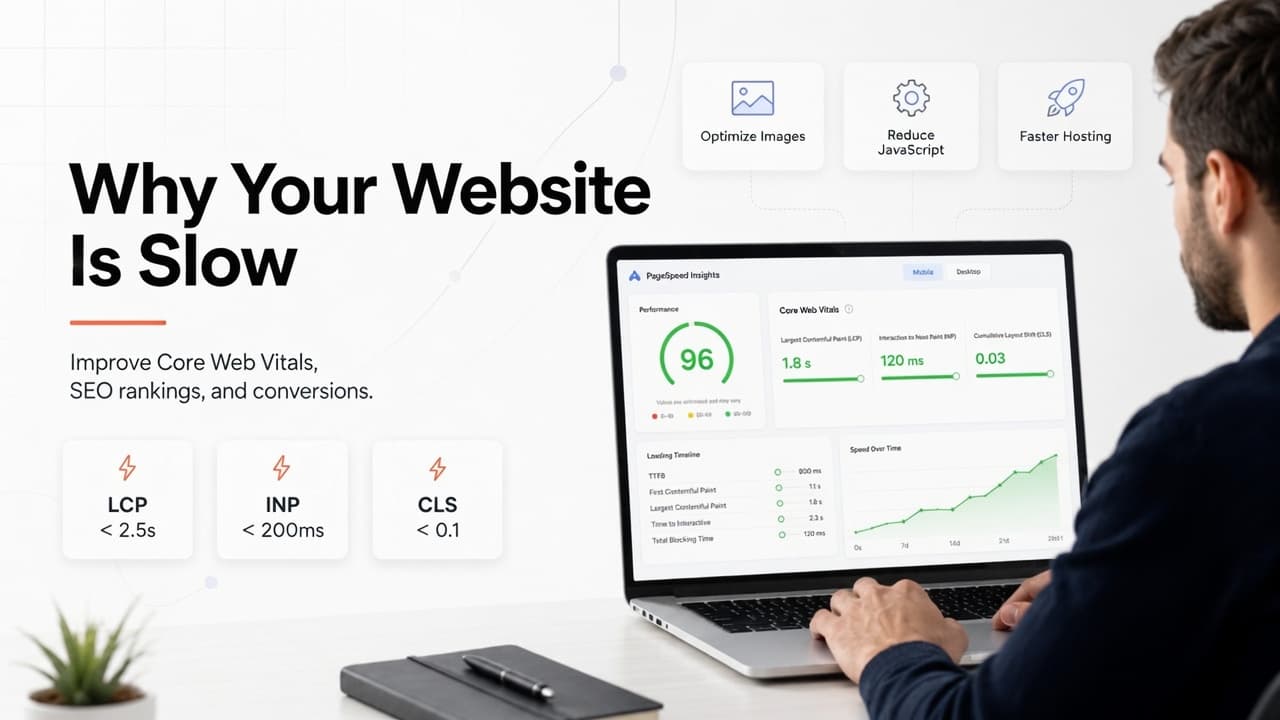
Why Your Website Is Slow (And How Core Web Vitals Affect Sales & Rankings)
A slow website isn't just annoying; it's quietly costing you rankings, leads, and sales, usually without anyone on the team realizing it. Here's what Core Web Vitals actually measure, why they matter more than most businesses think, and where to look first.